Consider This My Neurodivergence Coming Out
Three years ago, on March 22, 2022, I wrote a Facebook post after submitting my doctoral thesis.
At the time, it felt like pride. Relief. Closure.
Looking back, I think it was also something else.
I had just finished my doctoral studies in 4.5 years, while welcoming two children into the world and taking on a full-time teaching position across the country. I remember adding a line saying that I didn’t want to encourage overworking. That my research mattered deeply to me, but that I needed to prioritize health and family.

That post was the first time I sensed I had gone too far. And maybe, by writing it publicly, I hoped I would finally listen to the quiet internal voice asking me to slow down, not for productivity, but for survival.
What followed should have been rest and recovery.
Instead, my intensity simply changed costumes.
When I finally learned to set clearer boundaries at work, my personal projects expanded without restraint. I didn’t simply “start running.” Six months later, I ran a half marathon under two hours. I didn’t “get curious about cycling.” A few months later, I rode from Vancouver to Whistler: 120 km, over 2000 m of elevation. Then duathlon. Accidentally qualifying for world championships. Then learning to swim and completing two Ironman 70.3 races within two months. For three years, I measured my sleep with a ring, tracking not just hours, but heart rate variability and “readiness” for performance. I weighed every gram of food that went into my body. Was I getting enough protein to repair my muscles? Enough carbohydrates for energy? I carried my water bottle everywhere, making sure I stayed hydrated.
I wasn’t listening to my body — I was managing it.
Why?
Because my body doesn’t really do “just for fun.”
It’s exhausting. And quite frankly unbearable.
And that was just for my hobbies in recent years, to recover from my doctoral degree, because exercise, proper nutrition and sleep is good for me, right?
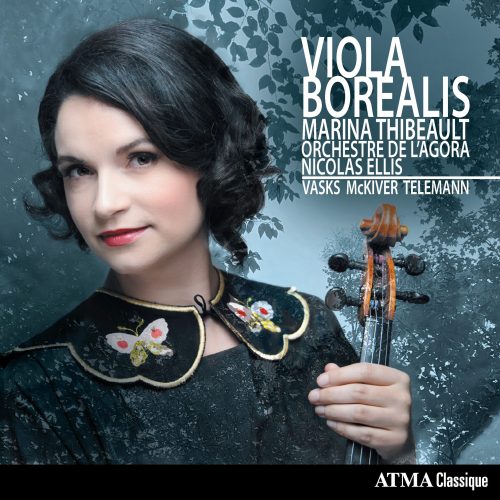
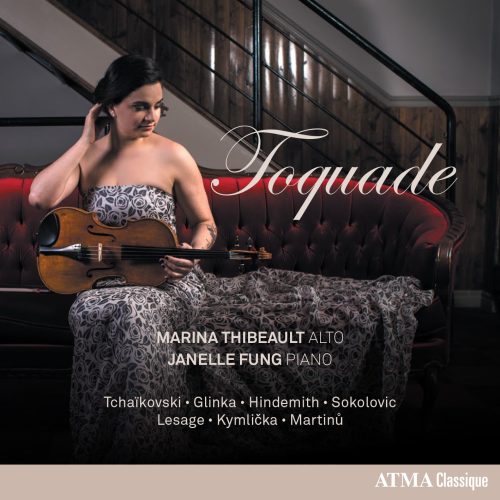
Can you imagine what I’m willing to do for my career? To get into Curtis. To prepare for international competitions. To record albums, win a Juno, to chase excellence, to say yes again and again.

And the same instinct followed me into motherhood. Home birth. Breastfeeding. Doing everything “right,” everything optimally, until my own body almost disappeared. I became nearly skeletal because I believed that breastfeeding them both for several years what was best for my children, for their health.
I vividly remember a moment in September 2019 — one of the most important concerts of my life: Harold in Italy with Yannick Nézet-Séguin and l’Orchestre Métropolitain. At that point, motherhood was draining me. I had just moved from Montreal to Vancouver to start a new job. My body felt fragile, weakened by unintentional weight loss from breastfeeding. I fear it might split in two. I could barely stand.
And yet, the mental high was undeniable. The adrenaline. The music. The colleagues. The audience. All of it lifted me, carried me, gave me that familiar surge, the one that makes everything else momentarily disappear.

Last year, I was diagnosed as intellectually gifted (high intellectual potential), with marked hypersensitivity. While my IQ is in the top 3% of the population, my working memory scored at around 50%., getting a solid F.
Working memory is what allows you to hold information in your mind while using it, following multi-step instructions, keeping track of details, remembering what you were about to say, or do, switching tasks without losing the thread. It’s the invisible glue of daily life. And when it’s fragile, everything takes more effort than it should.
It explains so much: the mental fatigue, the overwhelm, the need to over-prepare, the way intensity becomes a compensatory strategy. When working memory is unreliable, you don’t slow down — you speed up. You overlearn. You overperform. You leave nothing to chance.
Giftnedness sounds flattering on paper but feels much heavier in the body.
Because giftedness is not necessarily a gift. It’s intensity. A nervous system tuned too loudly. Overthinking. Over-processing. Emotional permeability. The pressure to live up to potential. The habit of building self-worth around accomplishment.
There are highs, real ones.
Hyperfocus. Flow. Performance. Periods where everything accelerates and unfolds naturally.
And then there are the lows.
Not quite depression. Something else.
Existential fatigue. Overstimulation. Irritability. Fog. The need to withdraw completely. These crashes don’t come from failure. They come from having gone too far, too fast, for too long.
Naming this changed something. Quietly, but deeply.
On Motherness by Julie M. Green
Recently, I started reading neurodivergent literature, looking for stories that might help me understand myself, and my children, better. That search led me to Motherness by Julie M. Green.
Motherness is important. Deeply so. Any work that shines a light on autistic women, especially those diagnosed in adulthood, navigating motherhood, often while parenting autistic or neurodivergent children themselves, fills a crucial gap in contemporary literature.
Julie M. Green writes beautifully. She has a real gift for translating autistic traits; sensory overload, rigidity, hypersensitivity, internal dissonance and weave it into everyday moments. The writing captures how neurodivergence inhabits daily life quietly, persistently, and often invisibly.
I’m grateful I crossed paths with this writer and this book. Reading a story rooted in Montreal added a layer of familiarity and warmth. I recognized many moments. I empathized with them deeply.

An Out-of-Office Reply for the Holidays
As the holidays approach, I find myself needing to say this, perhaps to myself more than anyone else:
Giftedness can trick us into excess. Into extravagant plans. Into over-functioning generosity. Into believing that rest must be earned, and that care must be impressive.
Knowing what I now know about my nervous system has changed how I approach this season. I’m learning to protect downtime. To cancel before burning out. To resist comparison. To practice auto-compassion instead of self-optimization.
Some things should never be performative.
Care. Listening. Presence. Generosity.
This year, I want less spectacle and more softness. Fewer plans and more space. Less proving, more being.
That’s the only Christmas gift on my list.
(Okay. Maybe that AND a Babaa sweater.)